
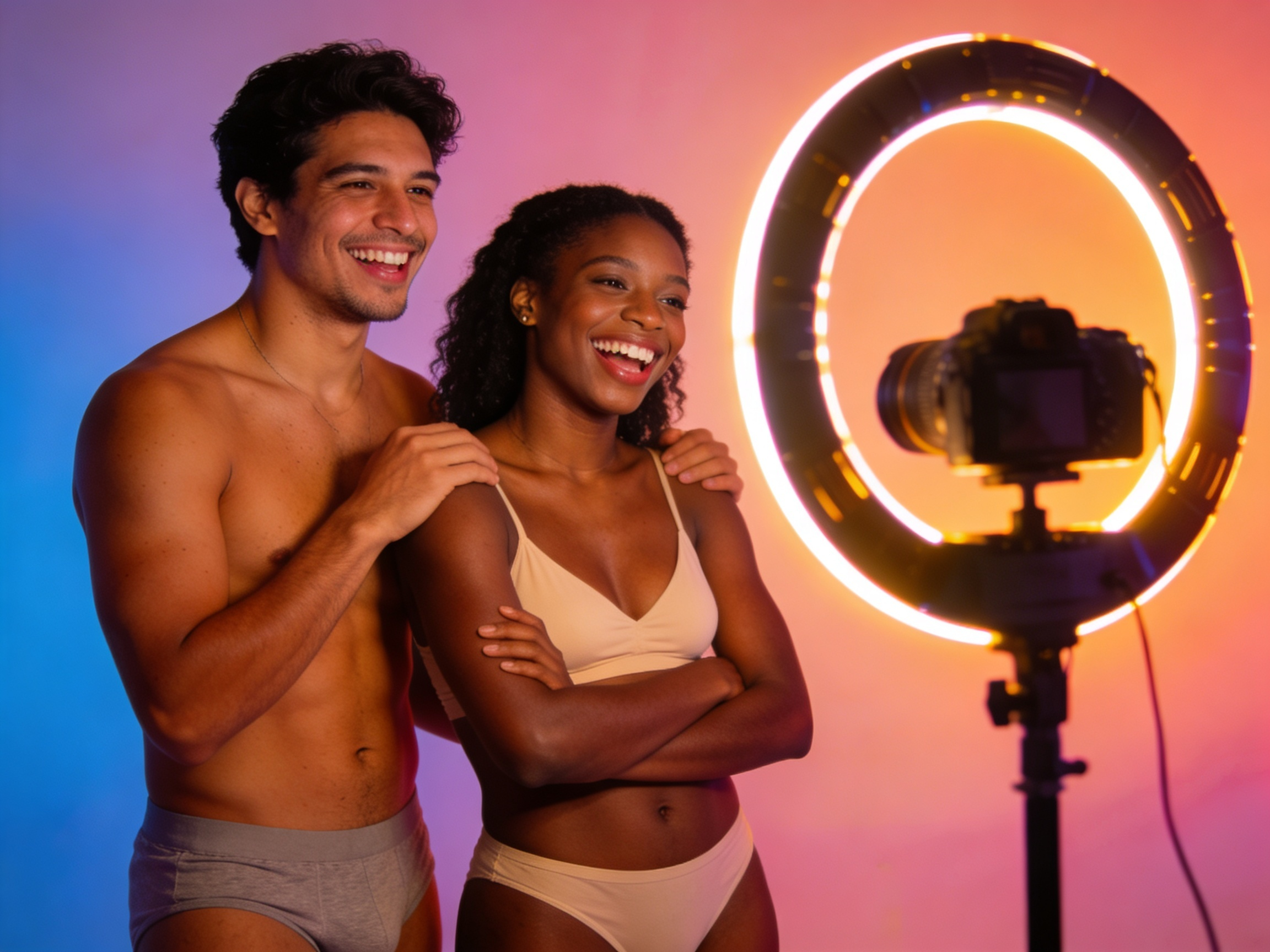

Breaking into adult content creation feels like walking into a room where everyone’s already naked and completely comfortable, while you’re still fumbling with your zipper. The market is massive, the competition is fierce, and the creators who make real money aren’t necessarily the hottest or the most explicit. They’re the ones who made smart decisions early. We’re talking about branding, privacy, gear, audience strategy, and retention. Get those five things right from day one, and you’re building something that lasts. Get them wrong, and you’re just another account collecting dust.
Table of Contents
- Define your brand identity from the start
- Prioritize privacy and protect your identity
- Invest smartly in equipment: start scrappy, then upgrade
- Engage and grow your audience strategically
- Why strategy trumps production value for new creators
- Take your next step with Kinky Korner
- Frequently asked questions
Key Takeaways
Define your brand identity from the start
Here’s the truth nobody wants to say out loud: most new creators fail because they try to be everything to everyone. They scroll through OnlyFans or similar platforms, see what’s performing, and immediately try to copy it. That’s a trap. You end up being a watered-down version of someone else, and audiences smell inauthenticity the way dogs smell fear.
Your brand identity is the whole package. It’s your stage name, your visual aesthetic, the tone you use in captions and messages, the color palette in your thumbnails, even the kind of music you play in video intros. All of it adds up to a feeling, and that feeling is what people subscribe to. They’re not just paying for content. They’re paying for you, or at least the curated version of you that you choose to present.
A consistent brand identity across your stage name, aesthetic, and tone builds the recognition and trust that directly drive monetization. That’s not marketing fluff. That’s the basic mechanism of how audiences bond with creators. Recognition first, trust second, money third. Skip any step and the whole chain breaks.
Start by asking yourself a few honest questions. What do you actually enjoy creating? What kind of person are you when nobody’s watching? What aesthetic feels natural to you versus what you’re forcing because you think it’ll sell? The answers shape your brand in a way that’s sustainable, because you can only perform a character that doesn’t fit you for so long before burnout hits hard.
- Choose a stage name that’s memorable, searchable, and completely separate from your real identity
- Develop a consistent color palette, lighting style, and photo editing approach across all content
- Write a clear bio that communicates your niche and personality in two sentences or less
- Use the same username across platforms wherever possible to increase audience recognition
- Create a mood board of creators you admire, but only borrow elements, never wholesale copy
“Your brand isn’t what you say it is. It’s what your audience consistently experiences when they interact with your content.”
Pro Tip: Study the top creators in your niche not just for what works, but for what feels authentic to them. The most successful creators aren’t trend-chasing. They built something specific and waited for their audience to find them.
Prioritize privacy and protect your identity
Let’s get blunt about this. Privacy in adult content creation isn’t paranoia. It’s basic career survival. There are real consequences to having your personal identity exposed, ranging from professional blowback in vanilla jobs to outright safety risks. Protecting yourself isn’t optional. It’s the foundation everything else gets built on.
The good news is that implementing strong privacy practices doesn’t require technical expertise or sacrificing creative quality. It requires consistency and habit.
Start with the obvious stuff. Your stage name should have zero connection to your legal name, hometown, workplace, or social circle. Separate email accounts for each platform. Separate phone numbers if possible, using services like Google Voice for verification purposes. A VPN on every device you use for content creation, full stop. No exceptions, even when you’re “just browsing” on a platform you’re registered on.
Watermarking is non-negotiable. Put your stage name on every piece of content before it leaves your hands. If someone pirates it, at least it’s marketing. If someone sells it without your consent, the watermark creates a paper trail. Good watermarking also signals professionalism to paying subscribers.
Background control is something a lot of new creators overlook completely until something identifying slips through. A degree on the wall. A street sign visible through the window. A distinctive piece of furniture someone from your real life might recognize. Using stage names, VPNs, watermarks, and blurred backgrounds is the minimum baseline for maintaining safe separation between your personal and professional life.
- Use a VPN every single time you access your creator accounts
- Watermark all photos and videos with your stage name before uploading
- Blur or replace backgrounds to remove any identifying environmental details
- Regularly Google your stage name and reverse-image-search your content to monitor leaks
- Never share your real location, even in vague terms like “East Coast” or “Pacific Northwest”
Pro Tip: Set a monthly calendar reminder to audit your digital footprint. Check your privacy settings on every platform, search your stage name, and review what metadata is embedded in your photos before you post. Metadata can reveal your device model, GPS coordinates, and timestamp. Strip it with a free tool before uploading.
Invest smartly in equipment: start scrappy, then upgrade
Every new creator goes through the same fantasy. “If I just had a cinema-quality camera, professional lighting, and a dedicated studio space, my content would blow up.” It’s tempting. It’s also almost always wrong.

Quality gear matters, but the hierarchy of what matters most surprises most people. Lighting is everything. A well-lit shot taken on a three-year-old iPhone beats a poorly lit shot taken on a professional mirrorless camera every single time. Sound matters next. Bad audio makes people click away faster than bad video. Camera quality is actually third on the priority list for most content types.
Here’s what your starting setup actually needs to look like:
- Lighting: A basic ring light or two softbox lights. Budget around $50 to $150 total.
- Camera: Your current smartphone, if it shoots at least 1080p. Most phones from the last four years do.
- Audio: A clip-on lavalier mic if you’re doing talking content, or a basic USB microphone for voice work. Around $20 to $40.
- Editing software: Free options like CapCut, DaVinci Resolve, or even iMovie get the job done until you’re generating consistent income.
- Backdrop: A cheap fabric backdrop or even a well-organized, aesthetically clean corner of your living space.
“Start scrappy with a smartphone if resources are limited. Strong branding and audience engagement will outperform fancy gear without strategy every time.”
The insight that Mashable’s experts hammer on is exactly this: starting with budget gear teaches you your actual workflow before you’ve committed serious money to it. You learn how you like to shoot, what angles work for your content type, what your editing style is. Spending $3,000 on gear before you know any of that is how you end up with expensive equipment collecting dust.
Pro Tip: Spend your first equipment dollars on lighting and sound. The return on those investments is dramatically higher than spending the same money on a camera upgrade. Your audience will notice improved lighting immediately, whereas the difference between an iPhone 14 and a mid-range mirrorless camera is often invisible in final edited content.
Engage and grow your audience strategically
The adult content market is sitting at approximately $60 billion globally in 2026 with a 9% compound annual growth rate. That’s a massive pie. But the distribution is brutal. The top 1% of OnlyFans creators capture 33% of all platform revenue. The middle 50% are scraping by. What separates those groups isn’t always content quality. It’s audience strategy.
Growth and retention are two completely different skill sets, and most new creators focus exclusively on growth while ignoring retention. That’s backwards. Acquiring a new subscriber costs far more energy than keeping an existing one happy. Subscription retention sits at 65% at the six-month mark on major platforms. Meaning roughly a third of your subscribers will have churned by then if you’re not actively working to keep them.
Here’s a breakdown of how growth activities compare to retention activities:
Retention strategies that actually work:
- Respond to messages personally, even if it’s just a short, genuine reply. Subscribers who feel seen stay subscribed.
- Drop exclusive content that isn’t available anywhere else on the internet, and remind subscribers of that exclusivity explicitly.
- Run monthly polls asking subscribers what they want to see. Act on the results. This is building loyalty in adult audiences at its most basic and most effective.
- Create limited-time content drops that create genuine urgency, not fake countdown timers.
- Send a personalized reactivation message to expired subscribers within 48 hours of their subscription lapsing. A simple “Hey, I noticed you left, here’s something exclusive if you come back” converts at a surprisingly high rate.
The creators who understand that every subscriber is a relationship, not just a transaction, are the ones who end up in that top tier. It’s a mindset shift more than a tactic, but the tactics flow naturally from it.
Why strategy trumps production value for new creators
I want to say something that runs counter to what most “how to succeed” content in this space pushes. The obsession with gear, production value, and polish is mostly a distraction, especially in your first year.
We’ve all seen it. Someone gets serious about adult content creation, immediately spends two grand on a camera setup, another five hundred on backdrops and props, and then burns out in three months because they never figured out their workflow, their niche, or how to talk to their audience. The expensive gear didn’t save them. It just made the failure more expensive.
Starting scrappy actually accelerates learning in a way that high-end equipment doesn’t. When you’re shooting on a smartphone, you’re forced to focus on composition, lighting, and your actual creative vision because you can’t hide behind technical specs. The creators who grind through their awkward early period on budget gear emerge knowing exactly what they want their content to look and feel like. Then when they upgrade, the gear serves a purpose. It’s executing a vision, not compensating for the absence of one.
The best adult creator strategy insights I’ve seen consistently point to the same conclusion: figure out who you are as a creator first. Your niche, your tone, your relationship with your audience. All of that is strategy. Strategy scales. Expensive gear without strategy just burns cash.
The creators who blow up aren’t always the most technically polished. They’re the ones who made their audience feel something real, built a consistent brand, and kept showing up. That’s achievable on any budget. Start there.
Take your next step with Kinky Korner
You’ve got the roadmap now. Branding, privacy, gear, growth, retention. That’s a serious foundation for a real career in adult content creation. But knowing the steps and actually executing them with a community behind you are two very different experiences.
At your adult creator community, Kinky Korner is built for exactly this moment in your journey. It’s a marketplace where adult creators and businesses can list services, connect with audiences, and access erotic literary and artistic content that keeps the community thriving. Whether you’re launching your first profile, looking to collaborate with established creators, or just wanting a space where your work is valued and seen, Kinky Korner is where the next chapter starts. Come build something real.
Frequently asked questions
What should I use as my stage name for privacy as an adult content creator?
Choose a unique stage name with no connection to your real name, location, or workplace, and use it consistently across every platform you create on.
Is expensive camera equipment necessary for starting adult content creation?
No. You can absolutely start with your smartphone and a basic ring light, and upgrade your setup only after you understand your workflow and are generating consistent income.
How can I keep fans subscribed on adult platforms?
Provide consistent exclusive value, engage personally with subscribers through direct messages, and reach out to re-engage expired subscribers within 48 hours of their lapse to maximize retention.
How big is the adult content industry for new creators?
The global digital adult market is approximately $60 billion in 2026 and growing at 9% annually, making it a genuinely significant economic opportunity for creators who build smart from the start.